Basics 1 of 7 · Oil and gas industry basics
Operators, service companies and everyone else
Ask who the company sells to before you ask what they buy.
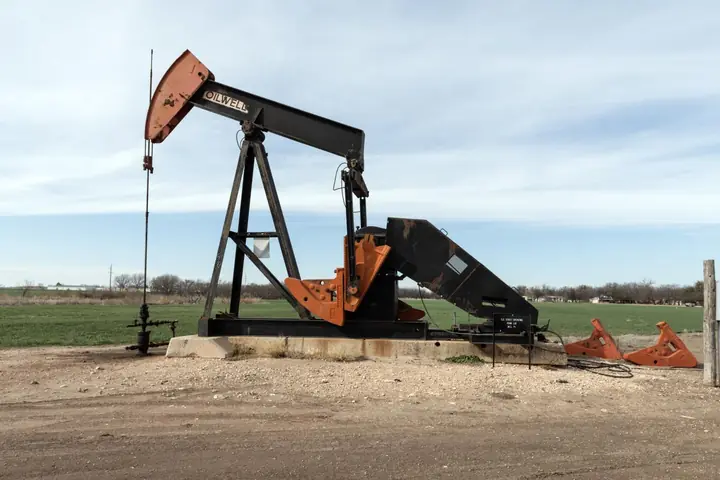 UpstreamA pumpjack near Winters, Texas, 2014
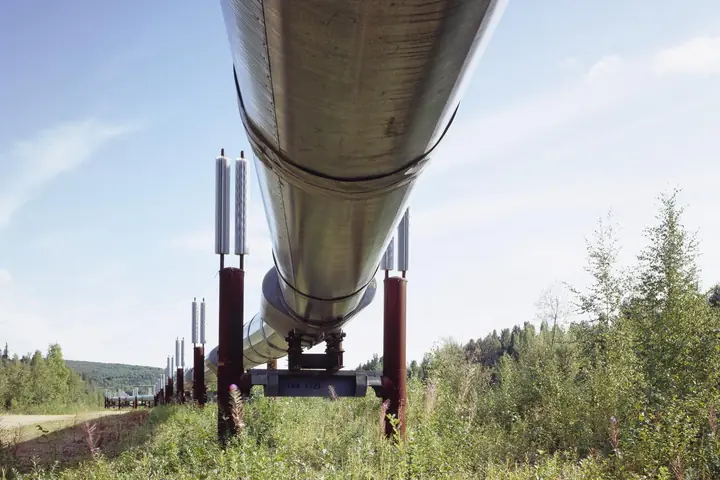 MidstreamThe Alaska pipeline, 1980
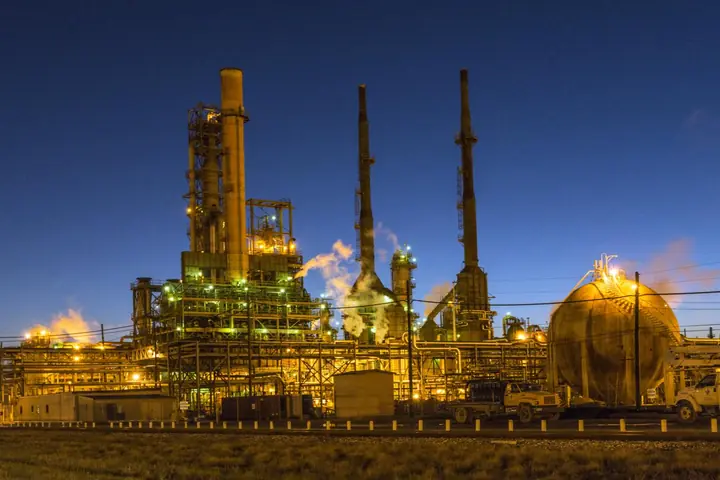 DownstreamA refinery in Port Arthur, Texas, 2014
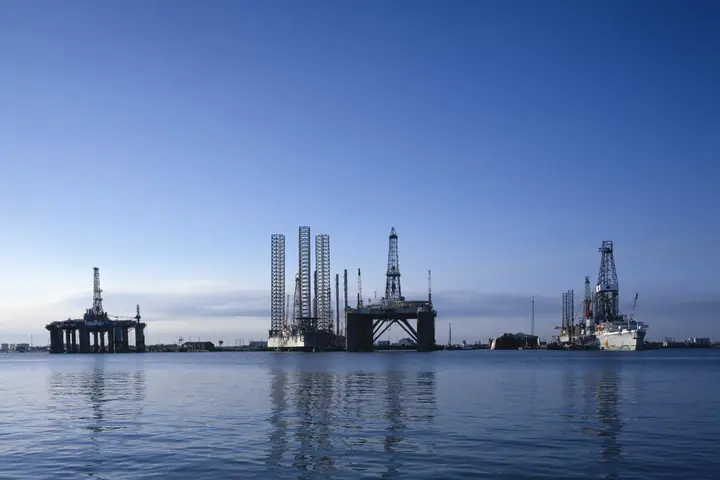 ServiceOffshore rigs at Galveston, Texas, 1980
The words
- Operator
- The company that holds the lease and runs the well, the pipeline or the plant. Also called an E&P (exploration and production company) on the upstream side. The operator is the end customer almost everything in this industry is eventually sold to.
- Service company
- Sells work and equipment to operators: drilling, pumping, wireline, completions, chemicals. Halliburton, SLB, Baker Hughes and Weatherford are the big four. They are also buyers in their own right.
- Upstream, midstream, downstream
- Finding and producing oil and gas; moving and storing it; refining and selling products made from it. Three different businesses with three different budgets, often inside one company.
- EPC
- An engineering, procurement and construction contractor. On a large project the EPC writes the specification and often does the buying, so the operator's name on the project is not the name on the purchase order.
- Supermajor and independent
- The five or six integrated giants (ExxonMobil, Chevron, Shell, BP, TotalEnergies) and everyone else who operates wells. The next page is about the difference.
Most people selling into this industry picture it as a few enormous companies. The structure is almost the opposite. In the United States, independent producers operate 95 percent of the wells, and there are roughly 9,000 of them, employing an average of 12 people each. The EIA counted 918,481 producing wells in 2024, and 78% of them made 15 barrels of oil equivalent a day or less. The industry is a long tail of small operators with a handful of giants at the top, and the giants are the hardest door.
Who operates US oil and gas wells
- 95 percent Independent producers
- 5 percent Majors and all others
918,481 producing wells in 2024; 78% of them made 15 BOE a day or less.
Public data: Independent Petroleum Association of America (IPAA); U.S. Energy Information Administration (EIA), The Distribution of U.S. Oil and Natural Gas Wells by Production Rate (release 2025-12-08). Read 2026-10-24.
The second thing outsiders miss is that operators are not the only buyers. The show lists the service companies by name and points out that they all sell to Exxon, BP and Chevron. If you become a vendor to a service company, your product can end up inside a supermajor without you ever selling to one. The show is equally clear about the catch:
“there's risks there too, because now Halliburton owns that relationship with the end buyer, not you.”
Source: Breaking into Oil and Gas, a Five Step Process, episode 100 of the Oil & Gas Sales & Marketing Podcast.
So the first question about any account is not what they buy. It is where they sit: operator, service company, contractor, or EPC, and who they in turn sell to. Two companies in the same segment can also buy the same thing in two different ways. On a subsea project, the show describes one supermajor speccing everything with its own engineers while a competitor hands that engineering to the manufacturer and only sets the well parameters. Same product, two processes.
Three routes to the same operator
- You, then Operator
Direct. You sell to the company that runs the well, pipeline or plant.
- You, then Service company, then Operator
The service companies all sell to Exxon, BP and Chevron. The catch: the service company owns that relationship, not you.
- You, then EPC, then Operator
On a large project the EPC or the operator's engineers write the specification, and the EPC often does the buying.
More from the show
The example is specific, and worth holding onto because it is how the whole industry behaves: the buying process belongs to the company, not to the product category.
“For their subsea installs, Exxon has its own subsea engineers that design and spec everything.”
Source: How to Sell Engineered Products, episode 22 of the Oil & Gas Sales & Marketing Podcast.
The show's advice on where a newcomer should start is the mid-size independents rather than the majors, for a reason that has nothing to do with company size and everything to do with how the deal moves.
“They have the same problems, but the deal cycle is much faster. They're also much more likely to work with you if they've never heard of you.”
Source: Breaking into Oil and Gas, a Five Step Process, episode 100 of the Oil & Gas Sales & Marketing Podcast.
In episode 100 Mark points newcomers to one of the first videos he ever made:
“one of the very first videos is me a million years ago when I had hair, explained what the difference is between upstream, midstream, and downstream”
Source: Breaking into Oil and Gas, a Five Step Process, episode 100 of the Oil & Gas Sales & Marketing Podcast.
Mark's four-minute map of the industry
Before the next call
Is this company an operator, a service company, a contractor or an EPC, and who do they sell to?